Wednesday, February 29, 2012

The Rise of Smartphones: Moderation is Key


Based on current trends of cellphone ownership, I would consider myself to be a late bloomer. I truly began using a cellphone at the age of 18. Nowadays however, even children under the age of 10 have their own mobile device. I don't understand why they need one or what they use it for, but they have it. Based on several studies and reports, cellphone usage is on the rise. In this post I will explore the growth in cellphone ownership/usage and what this means for us as a society.

There is little doubt that the introduction of smartphones triggered the rise in cellphones. Smartphones are basically mini computers. They have the ability to access the internet and install software programs called applications. These “apps” are the driving force behind the success of smartphones. The following article is a fantastic read that shows how smartphones have gone from a luxury to a tool of necessity: http://www.pittsburghlive.com/x/pittsburghtrib/business/s_668540.html.

Smartphones are a relatively new innovation. But the importance people place on these devices is hugely significant. As an avid Android user, I must admit the experience is mesmerizing. I am a proud owner of the world's first “superphone” as LG described their Optimus 2X. I upload my entire schedule into my phone. All my contacts, e-mails, grocery lists, and pending tasks are accessible through my phone – it's amazing. My phone is my lifeline in many ways. If I forget it at home, I feel lost and worried, disconnected from society. I'm positive a significant percentage of people share this sentiment. Why is it that a smartphone has so much a value? What features and qualities of smartphones produce this feeling of addiction? From my experience, I find that smartphones are becoming increasingly more popular and important in people's lives, because they provide so many ways to connect with one another. Humans are innately social beings. Smartphones, largely through the use of apps, have simplified and facilitated interaction and computer-mediated communication. Whether it's using BBM, Facebook for mobile, or Foursquare, millions of apps for smartphones are providing endless opportunities for people to communicate and interact from the convenience of a mobile device, regardless of location.

While all the benefits of smartphones are irrefutable, I think there are a few key drawbacks and disadvantages. A number of studies have shown that intensive use of electronics, whether smartphone or PC, and particularly accessing social media, can lead to increased chances of developing ADHD. Furthermore, a groundbreaking study found that people who use social networking sites for more than one hour a day, spend significantly less time in direct-contact with people (including household members). This is shocking information considering that one of the most popular activities of smartphone users is checking Facebook and Twitter. The consequences of the reduced contact are severe. Having physical contact with others, intimate or not, is critical for proper social development. Anything short can lead to various personality disorders.

In closing, I don't believe that we should all start to reduce the amount of time we spend on our smartphones. However, forewarned is forearmed, and we should make the most of this information by creating a strong balance. Too much of anything is not good – moderation is the key. What are your thoughts?

Sunday, February 26, 2012

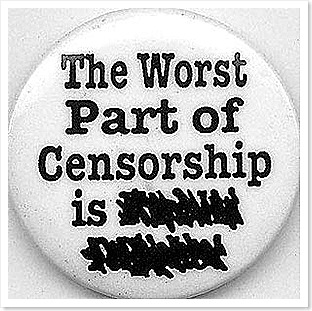
Internet Censorship


“Censorship is advertising paid by the government.” - Federico Fellini, Renowned Italian Film Director

Internet censorship is not a new concept. The greatest examples of it can be found in countries like China and Iran where over 5 million websites have been blocked by the government. Many of these websites are considered to be inappropriate for having anti-religious information or serve as a haven for political dissidents. Reporters Without Borders, a Paris-based NGO, has even developed an index that measures the level of censorship; countries like Iran and China, among others, are categorized as “enemies of the internet”.

Now, I guess it's no surprise that most of the “internet enemies” are also totalitarian regimes and their violation of human rights have been well-documented. But should governments even have the authority to control the content of the web? Should they be able to control what YOU can view online? What happens in totalitarian states seems to be out of our control, but recent developments in India, a democratic nation, have been causing global concern.

The Delhi High Court recently passed a law which orders a number of websites, including web giants Google, Facebook, and Yahoo, to “delete inflammatory images of religious figures” and remove any “objectionable or offensive content”. In an effort to make a clearer statement, a spokesperson said this law pertains to online content that is “harmful, threatening, abusive, harassing, blasphemous, defamatory, pornographic, libellous, invasive of another’s privacy, hateful, disparaging, racially, ethnically or otherwise objectionable, relating to money laundering or gambling.” The full article can be read here: http://searchengineland.com/free-speech-battle-in-india-google-facebook-summoned-by-court-over-inflammatory-images-105644

With over 100 million users, India has the third largest Internet audience. India is known to protect free speech and has taken a liberal stand on Internet censorship in the past. I am of the opinion that people should be able to have free access of the Internet as long as their activity is not malicious or offensive to anyone. Furthermore, the only involvement governments should have in regulating the Internet, is to ensure that these conditions are met; not to decide what Internet users can and cannot do.

The problem with the law in India is that it's not very specific and is subject to people's interpretation. For example, my idea of “offensive” content is different than someone else's. Furthermore, it leaves companies like Facebook and Google in an impossible situation. Pre-screening everything that gets uploaded on these websites is impractical. As such, companies like Google and Facebook have appealed to the Indian government for some leniency. Furthermore, it seems wrong to hold the websites liable for the content users upload. While the intentions of the Indian government are in good faith, the consequences of this law are significant and far-reaching. For example, anyone can now claim that some online content is offensive or defamatory.

There is little doubt why the passing of the law has raised so much concern. Such a precedence can be a dramatic change in a democratic society. The question now becomes, if traditionally free and liberal governments begin to adopt such policies, where will the line between freedom of expression and preserving respect be drawn? Also, what role will governments play in determining the content of the Internet?

Saturday, February 11, 2012

Open Education Resources: Is open source the answer to affordable education?

The rising cost of education is not surprising to anyone. According to College Board and the following article:

http://news.yahoo.com/open-source-textbooks-most-affordable-community-college-students-181120039.html

students in U.S. community colleges pay approximately $6,000 in tuition and $1,000 for textbooks annually. Many students cannot afford to purchase textbooks for their courses. Others simply choose to take fewer courses in order to buy books. In both cases, students are the ones being marginalized.

There are many factors that determine and influence the cost of an education. One approach to minimize costs has come through the implementation of a textbook rental program. Many universities have adopted this approach. While the savings are evident, the cost of renting a book is still significant. My problem with renting textbooks is that you must return the book after the term is over. Sometimes, I like to keep the textbooks I use in a course for future reference or because it was a fantastic read. Also, some students buy textbooks so that they can sell them and recoup some of the cost. With rental books, you pay a smaller amount up front, but receive nothing in return. This is why the rental program is heavily dependent on the buy/rent ratio. Digital books are another alternative to purchasing textbooks; they have also achieved little success. They often cost the same amount of money as regular books.

Geoff Cain, director of distance education at College of the Redwoods in California, believes that students need access to “open” learning materials to effectively reduce textbook expenses. Open learning materials consist of e-books, videos, and simulations, all of which can be accessed free of charge. The launch of OpenCourseWare (OCW) by MIT was a big step forward. OCW is a program that allows universities to share materials for free. Youtube has also become a big contributor to this movement. Nowadays, students can find tutorials and video recordings for almost any class. I know many students, including myself, who use these videos to supplement their learning or to catch up for a missed lecture.

Open-source books rely on the academic community: students, teachers, and administrators. Martha Kanter, undersecretary of U.S. Education Department, has been a long-time supporter of the open-source initiative. She argues that Open Education Resources (OER) will prevent instructors from having to renew textbook editions and students from having to pay huge sums regularly. OER is supported by a Creative Commons license, which gives users the right to modify, add, or delete information. This way instructors can combine free materials from all over the world.

In my opinion, open-source is the way to go. The benefits are plenty, risks are negligible, and the savings are monumental. Students can focus on doing just one thing, studying; instructors can make use of cutting-edge research that is conducted around the world. More and more universities are making use of open-source materials and adding to their online collections. Open-source materials are redefining the idea of affordable and universal education. The possibilities are limitless!

Monday, February 6, 2012

Privacy on Facebook

Blog readers: Welcome to my blog!

Considering this is my very first post, I wanted to dedicate it to something very dear to many students: Facebook. More specifically, privacy on Facebook.

I came across a very interesting article on Gizmodo, one of my favourite blogs that covers the latest developments in technology, design, and architecture. The article, titled, “Your Deleted Facebook Photos Still Aren’t Really Deleted,” can be found at:

http://gizmodo.com/5882703/your-deleted-facebook-photos-still-arent-really-deleted

The article states that although a user might delete a picture on Facebook, the picture would still be held on Facebook's servers. Even worse, anyone who had a static URL could still access that picture.

An employee of Ars Technica, a website that provides tech reviews and analysis, got in touch with Facebook on this matter. Apparently the Facebook servers that support photo storage weren't functioning properly. Although an image was deleted on Facebook, it wasn't removed from their servers. The spokesperson claims that Facebook is diligently working to rectify the situation. Their realistic goal is to have images permanently removed within 45 days.

As you can imagine, this raises a lot of issues about privacy on SNS. If anyone can access content that is meant to be hidden, or even deleted, sensitive or confidential information can get into the wrong hands.

Social Networking Sites (SNS), particularly Facebook, have received a great deal of criticism for how they handle a user's personal information. The controversy surrounding the introduction of the News Feed, and the use of Applications on Facebook, are just two examples that triggered much of this criticism. Facebook actually provides third party developers access to a user's profile and their personal information.

So, the next time you install an application on Facebook, take some time to read the Terms and Conditions. Try and understand what it is you're agreeing to. Put some value on your information and privacy. As Pete Seeger said, “Education is when you read the fine print; experience is what you get when you don't.”